Discover how automated billing transforms membership management, helping nonprofits reduce administrative burden while creating seamless recurring donation experiences that strengthen donor relationships.
Why Manual Billing Processes Hold Membership Organizations Back
The first version of recurring revenue always feels simple. You connect a payment processor, create a plan, and watch the first subscriptions come through. Then reality arrives: pro-rata joins, grace periods, failed cards, members who pay by invoice, and a finance team that needs every penny reconciled. What started as a straightforward setup quickly reveals itself as a system held together by spreadsheets, manual reminders, and weekend catch-up sessions.
Manual billing processes create friction at every stage of the member lifecycle. When someone joins mid-year, calculating the correct pro-rata amount becomes a custom task. When a card fails, there is no context-aware retry—just a generic dunning email that treats a fifteen-year member the same as someone who signed up last month. Finance chases numbers across disconnected systems, membership data lives separately from payment data, and no one has real-time visibility into what is actually happening with renewals.
The administrative burden compounds as your organization grows. Staff hours disappear into reconciliation, members receive inconsistent communication, and the data needed to understand retention patterns remains locked across fragmented tools. This is not just inefficiency—it is risk. Every manual step introduces the possibility of error, delayed renewals, and damaged relationships with the members who sustain your mission.
How Automated Billing Creates Seamless Recurring Donation Experiences
Running subscriptions for an association is not the same as running subscriptions for a SaaS product. The rules are softer, the relationships matter more, and a clumsy dunning email can lose a member you have had for fifteen years. Good association billing is quiet. Members renew without thinking about it, and finance never chases a number.
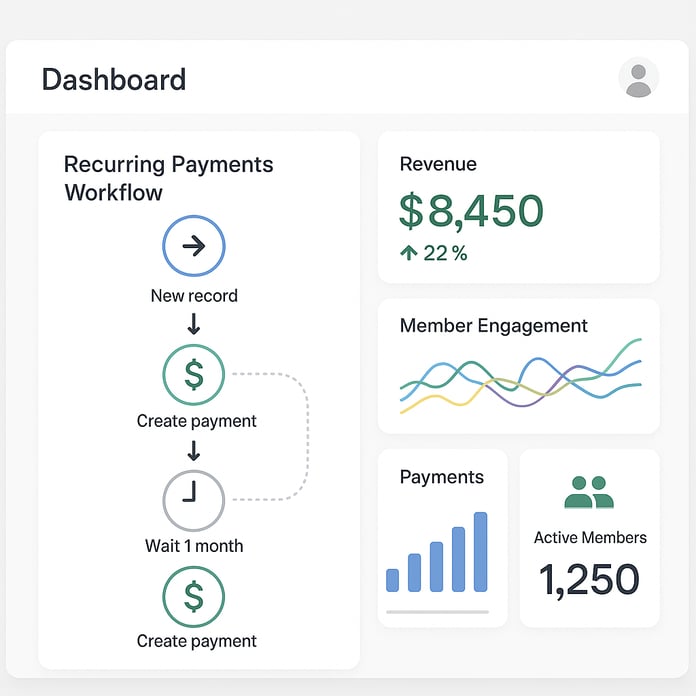
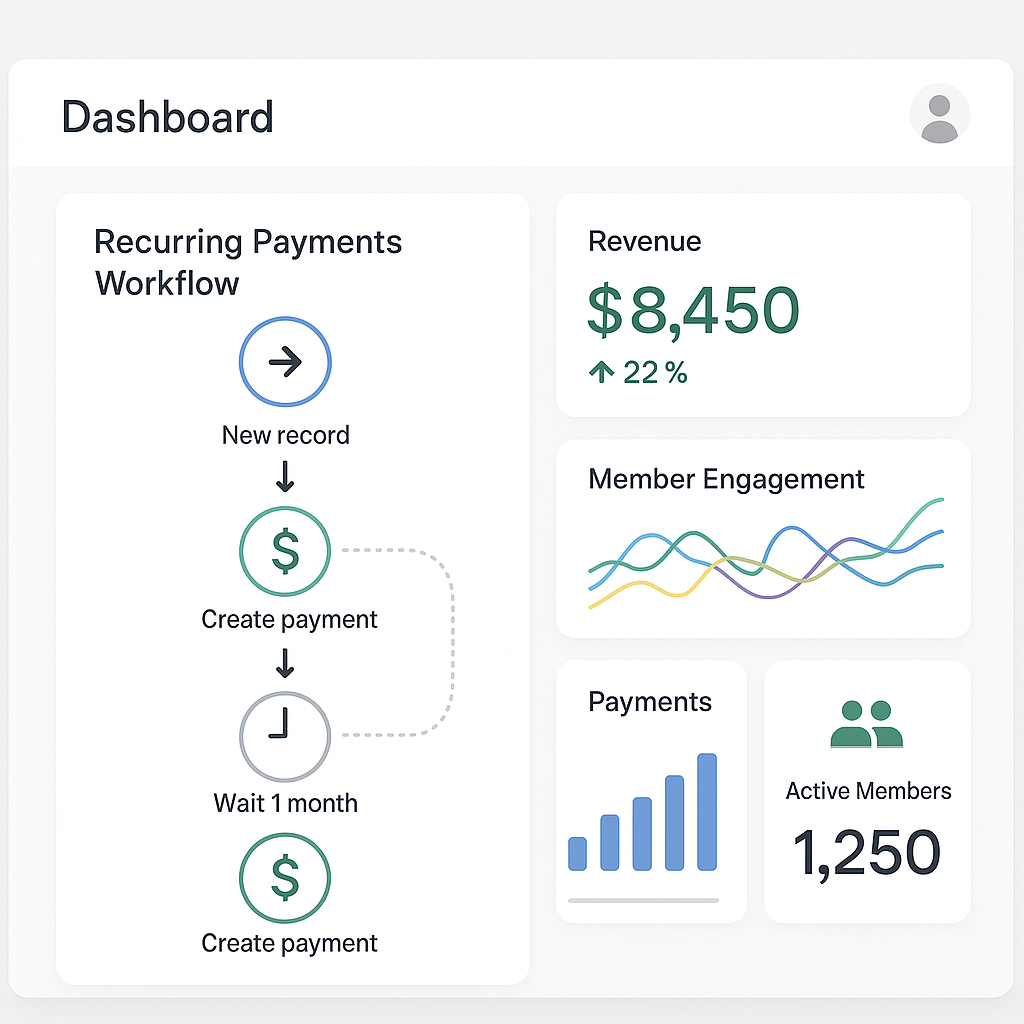
Automated billing workflows handle the complexity without the noise. Pro-rata pricing for mid-year joins happens automatically. Grace periods ensure a lapsed card does not instantly revoke benefits. Payment retries are intelligent, not transactional—acknowledging member history and adapting communication accordingly. Invoice-based payment for corporate and institutional members integrates seamlessly into the same system that processes credit card transactions, eliminating the need to maintain parallel processes.
When billing is native to the CRM, a failed payment is not just a payment processor event—it is context. The member record knows how long they have been with you, whether they are mid-renewal, and what to say next. Automated retries and reminders can be warm rather than transactional. Receipts send themselves. Books balance in real time. Members experience a frictionless journey from sign-up through ongoing renewals, and your team gains hours back to focus on engagement rather than administration.
Connecting Payment Data to Your CRM for Unified Member Visibility
Disconnected systems create blind spots. When payment data lives in one platform, member records in another, and communication history in a third, no one has the full picture. Support teams cannot see payment status when a member reaches out. Marketing cannot segment based on subscription health. Finance cannot reconcile revenue without manual exports and spreadsheet gymnastics. Every department operates with partial visibility, and decisions get made with incomplete information.
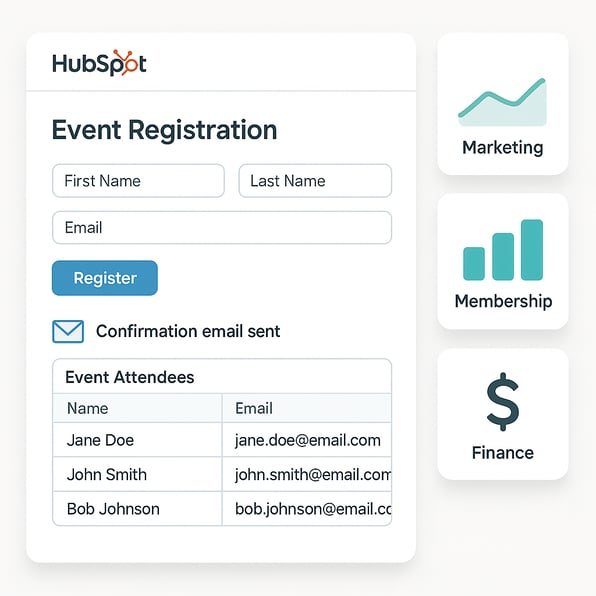
Unified member visibility means every customer touchpoint connects to a single source of truth. When payment data syncs directly to the CRM, subscription status becomes a native field alongside engagement history, event attendance, and communication preferences. Teams see real-time updates when a payment succeeds, fails, or moves into retry. Automated workflows trigger based on payment events—not days later, but immediately, with full context.
This integration unlocks personalized, lifecycle-driven engagement. Members who are approaching renewal receive timely, relevant communication. Those experiencing payment issues get proactive support before their subscription lapses. Corporate members with invoice-based billing see accurate account histories without manual intervention. Finance teams access drag-and-drop, highly flexible custom reporting that connects revenue recognition to actual member activity. The result is better decision-making, improved retention, and a member experience that feels cohesive rather than fragmented.
Reducing Administrative Hours While Improving Payment Success Rates
Manual billing processes consume time that could be spent on mission-critical work. Staff spend hours each week reconciling payments, chasing failed transactions, responding to billing inquiries, and updating records across disconnected systems. These tasks are repetitive, error-prone, and scale poorly. As membership grows, the administrative burden grows with it—unless the underlying workflows are automated.
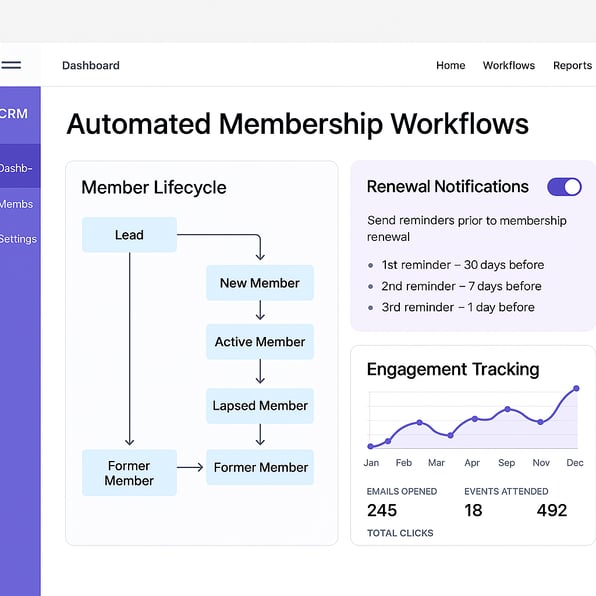
Automated billing workflows reduce manual effort at every stage. Intelligent routing and escalation handle payment retries without human intervention. Automated reminders go out before cards expire, reducing involuntary churn. When payments fail, context-aware communication replaces generic dunning emails, improving recovery rates while maintaining member trust. Reconciliation back to your accounting platform happens automatically, eliminating manual entry and reducing month-end close time by one to three days.
The outcome is measurable. Payment success rates improve when retry logic adapts to member behavior rather than applying blanket rules. Administrative hours decrease as workflows handle routine tasks. Finance gains real-time visibility into revenue without waiting for end-of-month exports. Teams redirect saved time toward engagement, retention, and program development—activities that strengthen member relationships and drive sustainable growth. Automated billing is not just about efficiency; it is about creating capacity for the work that truly matters.
Building Scalable Billing Workflows That Grow With Your Mission
Edge cases break most setups. The pro-rata join that requires manual calculation. The corporate member who needs invoice-based billing while individual members pay by card. The grace period that differs by membership tier. The finance team that needs every transaction reconciled to the accounting platform without duplicate entries. These are not edge cases—they are the reality of running memberships at scale. Systems that cannot handle complexity without manual intervention become bottlenecks rather than enablers.
Scalable billing workflows anticipate complexity and absorb it within the architecture. Custom objects, roles, rules, and audit trails provide the governance needed to manage multiple membership tiers, payment methods, and billing cycles from one platform. Automated workflows route payments, apply discounts, and trigger communication based on member type and subscription status. Real-time analytics and dashboards surface actionable insights—forecast variance, churn risk, renewal health—without requiring manual reporting.
When billing is native to the CRM and syncs cleanly to your accounting platform, the system grows with you. Adding new membership tiers does not require rebuilding integrations. Expanding into new regions or payment methods happens within existing workflows. Finance maintains governance and accuracy as transaction volume scales. Members receive consistent, personalized communication regardless of how they pay or when they joined. This is what it actually takes to run association subscriptions properly—and why doing it on a single platform matters. The architecture shift from fragmented tools to a unified, automated system is not just operational; it is strategic, creating the foundation for sustainable growth and stronger member relationships.